Everything You Need to Know About Boat Fender
Release time: 2026-07-08
Whether you are docking a commercial cargo vessel, managing a busy marina, or enjoying a weekend cruise on a private yacht, one thing remains constant: the unpredictable motion of marine waters. Without the proper protection, a split-second collision against a concrete dock or an adjacent vessel can cause catastrophic structural damage to your boat’s hull.

That is where boat fenders (often referred to as marine bumpers or docking buoys) come into play. As a premier manufacturer of high-end marine protection solutions, Xinyue has compiled this ultimate guide to help you understand the types, materials, sizing, and engineering standards of boat fenders to secure your maritime investments.
What is a Boat Fender and Why Does It Matter?
At its core, a boat fender is a sacrificial energy absorber designed to cushion the impact between a vessel and a dock, pier, or another boat. When a boat berths, tidal currents, wind shear, and wake action exert massive kinetic energy. Boat fenders translate this hard kinetic impact into managed compression, protecting the gelcoat, fiberglass, or steel hull from cracking and deformation.
Choosing the wrong fender isn’t just a minor inconvenience—it can lead to thousands of dollars in hull repair costs and compromise vessel safety.
Core Types of Boat Fenders and Their Applications
Different mooring environments and boat profiles require specific fender geometries. Here are the industry-standard shapes manufactured and supplied by Xinyue:
1. Cylindrical Fenders (A & F Series)
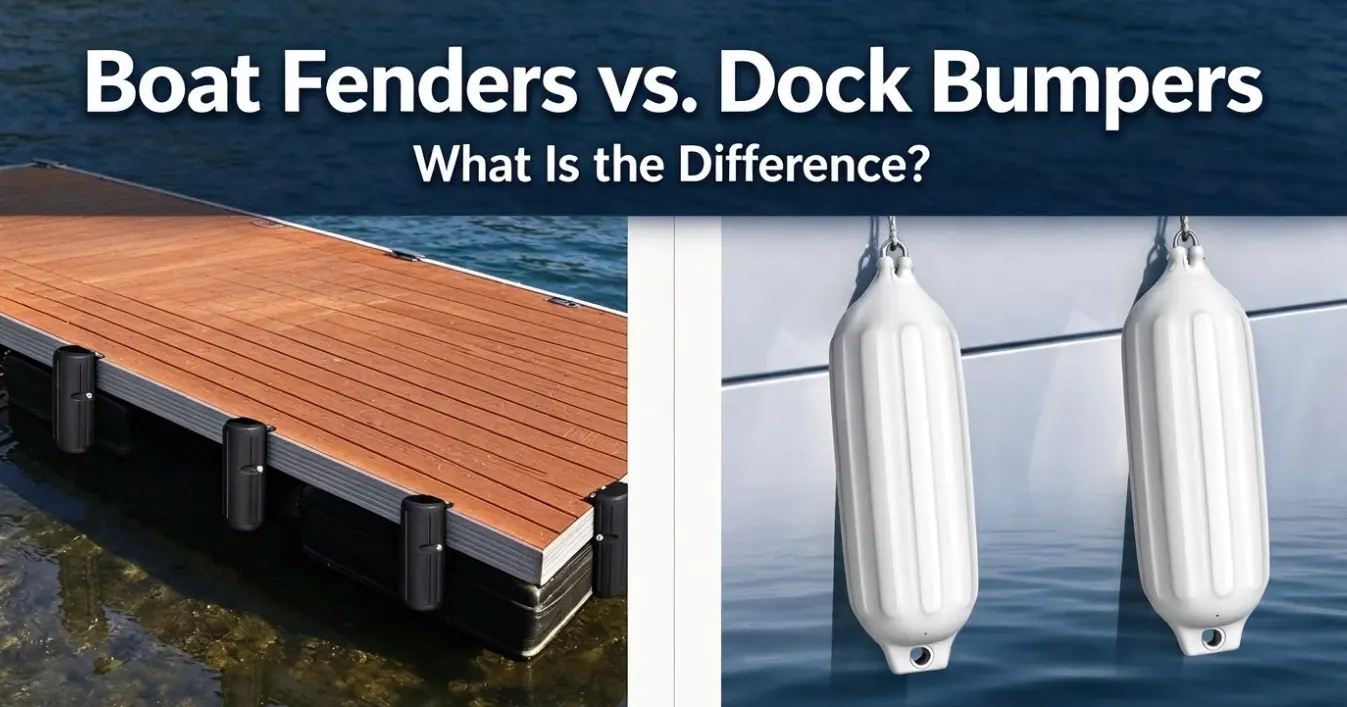
These are the most ubiquitous fenders utilized globally. They feature reinforced eyelets at one or both ends, allowing them to be hung vertically or horizontally.
- Vertical Hanging: Ideal for flat, smooth dock walls.
- Horizontal Hanging: Perfect for protection against round pilings or when encountering fluctuating tidal docks.
2. Round/Ball Fenders (A-Series Buoys)
Characterized by their spherical, heavy-duty design, round fenders offer massive volume and energy absorption. They are heavily favored by commercial fishing vessels, larger yachts, and commercial tugs. Due to their wide diameter, they keep the boat further away from the dock structure, providing an extra safety buffer during rough sea berthing.
3. Inflatable Heavy-Duty Marine Fenders
For mega-yachts and commercial vessels, inflatable PVC or rubber fenders offer the perfect balance of elite-level impact cushioning and space-saving convenience. They can be deflated and compactly stored when cruising and quickly inflated via standard air valves before approaching the harbor.
Material Engineering: Why Quality Dictates Longevity
Not all boat fenders are created equal. The marine environment is brutal, characterized by constant UV radiation, saltwater corrosion, extreme thermal fluctuations, and immense friction.
At Xinyue, our marine engineers focus on advanced metallurgy and polymer optimization. Our boat fenders are synthesized using premium, marine-grade Heavy-Duty PVC (Polyvinyl Chloride) or reinforced engineered rubber, delivering three critical physical properties:
- High UV Resistance: Formulated with advanced UV inhibitors to prevent the polymer chains from breaking down, cracking, or becoming brittle under prolonged solar exposure.
- Seamless One-Piece Molding: Our rotationally molded construction means there are no seams to split under sudden high-pressure impacts.
- Optimal Elasticity: The material is flexible enough to cushion a 10-ton impact smoothly, yet robust enough to bounce back to its original geometry instantly without structural memory loss.
Sizing Chart: How Many and What Size Do You Need?
A common mistake in marine procurement is under-fendering. As a standard industrial rule of thumb:
The 10-Foot Rule: You need 1 inch of cylindrical fender diameter (or 2 inches of round fender diameter) for every 4 to 5 feet of boat length.
The Quantity Standard: A minimum of three fenders should always be deployed when docking: one at the widest beam, one at the bow, and one at the stern.
Refer to our quick engineering allocation table below for standard berthing configurations:
| Boat Length (Ft) | Cylindrical Fender Size (Dia × Length) | Round Fender Diameter | Recommended Quantity |
| Under 20 ft | 4.5″ × 16″ | 9″ | 3 Pcs |
| 20 – 30 ft | 6.5″ × 23″ | 15″ | 3-4 Pcs |
| 30 – 40 ft | 8.5″ × 27″ | 18″ | 4 Pcs |
| 40 – 50 ft | 10.5″ × 30″ | 21″ | 4-6 Pcs |
Maintenance and Best Practices
Routine maintenance significantly extends fender lifespan and performance.
Key recommendations:
- Maintain correct inflation pressure (approximately 2 psi or 0.14 bar); avoid over-inflation in hot climates
- Position fenders slightly above the waterline to prevent marine growth buildup
- Clean regularly with fresh water and mild soap; avoid harsh chemicals
Consistent maintenance can extend service life to 5–10 years or more.
Why Choose Xinyue
Xinyue is not just a supplier—we are a manufacturing partner for global marine businesses.
Our capabilities include:
- OEM and private label production
- Custom sizes, colors, and branding
- High-volume manufacturing with strict quality control
- Reliable global shipping and supply chain support
We serve marine distributors, port authorities, and yacht builders with consistent quality and scalable production.
Protect your vessels with engineered marine solutions built for performance, durability, and reliability.